


Rhodium Plating: What It Is and When to Replate
Why white jewelry is plated with rhodium, how thin that layer really is, where it wears first and when a replate makes sense.
Quick Facts
The white you see is often a coating
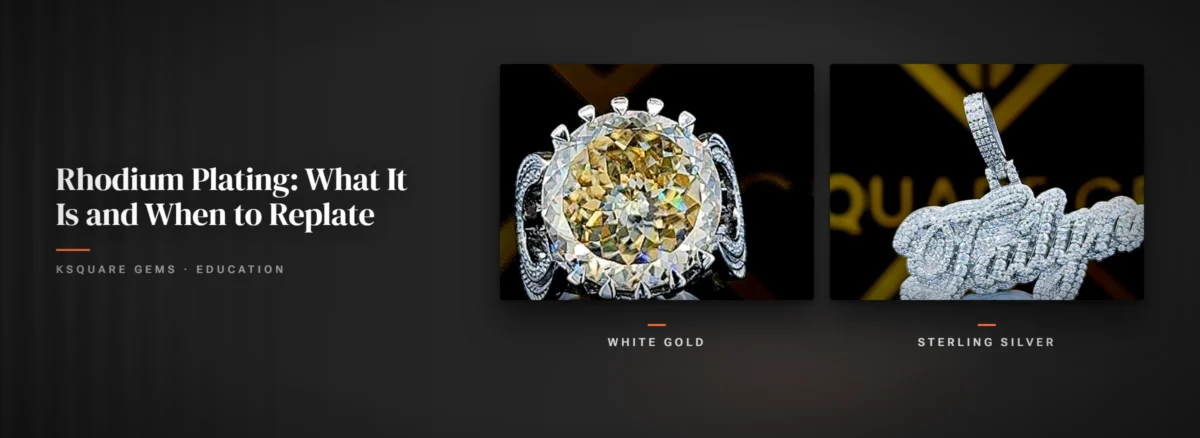
Pick up a new white gold ring or a bright sterling silver pendant and the color you are looking at may not belong to the gold or silver at all. A large share of white jewelry is finished with a thin layer of rhodium, a metal from the platinum family. It is very white, it resists tarnish, and it is harder than the silver or gold underneath it.
Rhodium is rarely used as a solid jewelry metal. It is scarce, it is difficult to work, and it is one of the most expensive metals traded. What it does well is sit on the surface of another metal in a layer far thinner than paper, and that is how almost all of it ends up in jewelry.
Why silver and white gold get plated
The reasons are different for each metal.
- White gold is yellow gold alloyed with whiter metals such as palladium or nickel. The result is pale, often slightly yellow or gray, not the icy white people expect. Rhodium covers that tint, which is why most white gold rings leave the workshop plated.
- Sterling silver (92.5% silver, usually with copper making up the rest) is white to start with, but it tarnishes. Sulfur in the air, in skin and in some foods darkens it over weeks or months. A rhodium layer keeps the silver from reacting, so the piece stays bright with far less polishing.
Freshly polished silver is actually a touch more reflective than rhodium. The difference is that rhodium stays that way, while bare silver starts to dull as soon as it meets the air. Rhodium also has a cooler, slightly blue-white tone, which many people like next to colorless moissanite.
How thin the layer is
Rhodium plating on jewelry is usually somewhere between about 0.1 and 1 micron thick. A micron is a thousandth of a millimeter. A human hair is roughly 50 to 100 microns across, so even a generous rhodium coat is dozens of times thinner than a hair.

Some platers put a thin barrier layer of palladium or nickel down first, especially over silver, so the rhodium bonds well and the silver cannot migrate up through it. You will not see this layer, but it matters if you have a nickel sensitivity: once the rhodium wears through, a nickel layer or a nickel white gold alloy can touch your skin. If you react to nickel, ask a jeweler what they use before you replate. Why Jewelry Turns Skin Green explains how to tell a nickel reaction from a harmless mark.
Where it wears first
Rhodium is hard, but a layer under a micron thick cannot survive friction forever. It wears in a predictable pattern: wherever metal rubs against something, over and over.
- The underside of a ring, the part that sits against your palm. Every grip on a steering wheel, a bag strap or a barbell scuffs it.
- Clasps and jump rings, which rub against each other and get handled every time you put a piece on.
- Pendant bails, because the chain slides through the bail all day.
- Raised edges, corners and prong tips on the front of a piece, the high points that brush against clothing and tables.
Recessed areas and the metal between pavé stones keep their plating much longer because nothing reaches them.

Signs your plating is thinning
On white gold, the first sign is usually a faint yellow or champagne tint on the palm side of a ring. On silver it shows up differently: the worn area looks slightly warmer and less blue-white than the rest, and over the following months it may start to go gray or dark as the exposed silver tarnishes while the plated areas stay bright. That patchy look, bright here and dull there, is the giveaway.
Look at a piece under a desk lamp next to a part you know is untouched, such as the inside of a bail or the back of a setting. Plating wear is easy to miss in a mirror and obvious when you compare two areas side by side.
How long it lasts
There is no fixed lifespan, because it depends on thickness and on how the piece is worn. As a rough guide from what we see:
| Piece | How it is worn | When wear tends to show |
|---|---|---|
| Ring worn every day | Constant contact with hands and objects | Often within the first year |
| Ring worn on weekends | Occasional contact | Usually a year or two |
| Pendant | Rubs only at the bail and back | Often several years, bail first |
| Earrings, display pieces | Little friction | Can last many years |
Chemicals shorten all of these. Chlorine in pools and hot tubs, harsh cleaning sprays and abrasive toothpaste (an old cleaning trick that should stay retired) all wear plating or attack the metal underneath.
What replating involves
Replating is routine bench work for most jewelers. The usual steps are:
- Clean the piece thoroughly, often in an ultrasonic and with steam, to remove oils and dirt.
- Polish out scratches, because plating copies the surface exactly. A scratch under new rhodium is still a scratch.
- Degrease and rinse again, since any fingerprint left on the metal will stop the rhodium from bonding there.
- Lower the piece into a rhodium solution with a small electric current, usually for a minute or two.
- Rinse and dry.
Two-tone pieces need extra care. The jeweler either masks the gold-colored areas or uses a pen plating tool to apply rhodium only where it belongs. Moissanite handles the cleaning and plating baths without trouble. The bigger risk with pavé work is a loose stone being shaken out in the ultrasonic, so ask for the settings to be checked before cleaning starts. For more on that, see Stone Settings Explained.
Making the plating last
- Put rings on last, after lotion, sanitizer and hair products, and take them off first.
- Remove rings for the gym, yard work and anything involving a firm grip.
- Clean with lukewarm water, a drop of mild dish soap and a soft brush. Skip polishing cloths treated with silver polish.
- Store pieces apart so one piece cannot scratch another. Moissanite is far harder than any plating and will mark it. How to Store Jewelry has a simple setup.
- Keep plated pieces out of pools, hot tubs and the shower.
Our care basics are in How to Care for Silver and Gold Jewelry, and the difference between solid metal and plating is covered in Gold, Silver and Plating Explained. If you are choosing a silver piece, you can browse our sterling silver pendants.
Frequently Asked Questions
No. White gold is a solid alloy of gold and white metals. Rhodium is a thin coating that is often applied over white gold, and over sterling silver, to make it whiter and more resistant to tarnish.
It is hard to tell by eye when new. A silver piece that stays bright for months without polishing is likely plated. Patchy wear, with warmer or darker areas on the edges and bail, is another sign.
Home pen plating kits exist, but getting an even, well-bonded layer depends on thorough cleaning and polishing first. For anything set with stones, a jeweler is the safer choice.
Moissanite is very hard and tolerates the cleaning and plating process well. The main concern is loose stones in pavé settings, so have the settings checked before the piece is cleaned.


Worldwide Delivery
Enjoy complimentary overnight shipping with fast delivery, ensuring convenience and prompt luxury service.
14 Days Returns
Experience peace of mind with our satisfaction guarantee, ensuring premium quality and unmatched customer service.
Lifetime Warranty
Shop with confidence, backed by verified trust ratings, secure transactions, and exceptional quality assurance every time.
24/7 Customer Support
We're here for you anytime, anywhere. Our dedicated customer support team is ready to assist you around the clock.