

Men’s Ring Styles and Which Finger to Wear Them On
Signets, bands, iced and statement rings: what each style says, which finger suits it, how many to wear and how to get the size right.
Quick Facts
Five styles worth knowing
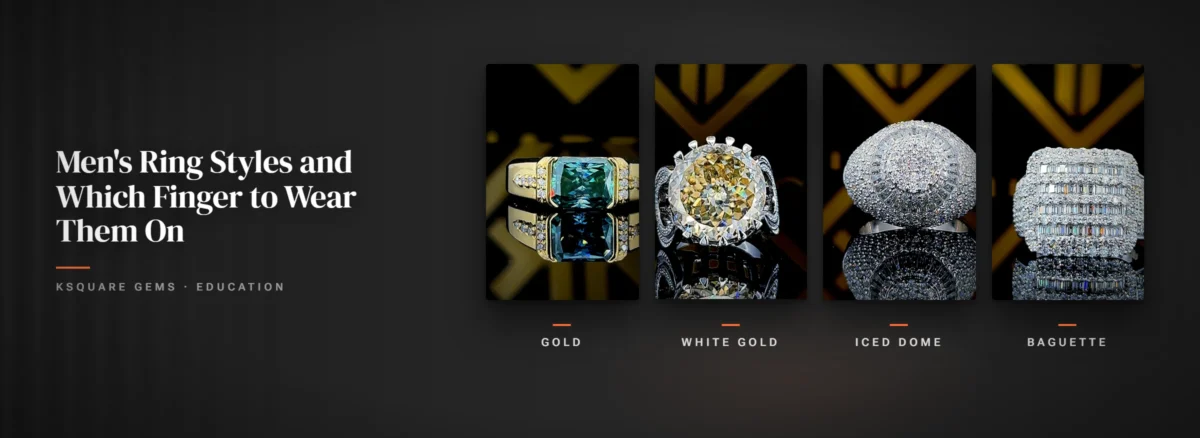
Men’s rings fall into a handful of families. Most of the rings you see on hands every day are one of these, or a mix of two.
- The band. A plain ring of even width, in polished, brushed or hammered metal. It is the default men’s ring for good reason: it goes with everything and it is comfortable all day.
- The signet. A ring with a flat face on top. Signets were once pressed into hot wax to seal letters, which is why the face was often engraved with a crest or initials. Today the face is as likely to be plain, textured or set with a stone.
- The cluster or iced ring. A top covered in small stones, often moissanite in pavé or channel settings. It catches light from every angle and reads as bold even when the ring itself is not large.
- The statement ring. Tall, wide or sculpted, built to be noticed. Many hip-hop rings live here, including designs with rows of baguette stones.
- The solitaire. One stone set on a band. Less common on men than women, but a medium round or square stone on a heavy gold band has a long history in men’s jewelry.

Which finger, and what people read into it
There are very few strict rules here, and most of the meanings below are traditions rather than codes. Still, people do notice, so it helps to know what they might assume.

| Finger | What people tend to read into it | Styles that suit it |
|---|---|---|
| Thumb | Confidence, a deliberate fashion choice | Wide plain bands, simple heavy rings |
| Index | Visible and assertive | Signets, medium statement rings |
| Middle | Neutral; the center of the hand | Large iced and statement rings |
| Ring finger | Marriage or commitment, depending on the hand | Bands, solitaires |
| Pinky | Tradition and personal style | Signets, small iced rings |
A few details behind that table:
- Ring finger: in the US, the UK and Canada a wedding ring goes on the left hand. In Germany, Poland and Russia, among other countries, the right hand is traditional. If you wear a plain band on your left ring finger in the US, most people will assume you are married.
- Pinky: the pinky signet has a long history among European families, often on the non-dominant hand. In Canada, many engineers wear the Iron Ring, a plain iron or stainless steel band given at a graduation ceremony, on the pinky of their working hand. The old movie-gangster image of the pinky ring has largely faded.
- Thumb: archers in several cultures wore thumb rings to draw a bowstring. Now a thumb ring is simply a confident look, best kept to a plain band because a set stone on the thumb takes constant knocks.
- Middle: it is the longest finger and sits in the center, so a big ring here looks balanced rather than lopsided. It is the natural home for a large iced piece.
How many rings to wear
Start with one or two rings per hand and adjust from there. A few guidelines that keep a hand from looking crowded:
- Pair one large ring with smaller ones rather than wearing several statement pieces at once.
- Leave a finger empty between rings unless you are stacking on purpose.
- Balance across both hands. Three rings on one hand and none on the other can work, but it draws the eye to that side.
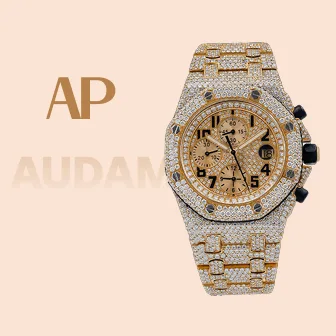
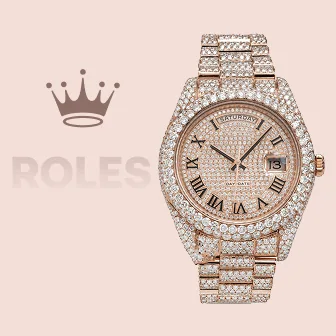
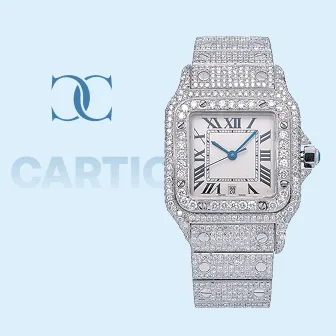
- Count your watch. A heavily iced watch already adds a lot of sparkle to that hand, so the ring on the same side can be quieter.
Sizing is different on every finger
Your ring size on one finger tells you very little about the next. The thumb and middle finger are usually the largest, the pinky the smallest. Fingers on your dominant hand are often about half a size bigger than the same fingers on the other hand.
Width changes things too. A wide band covers more of the finger, so it feels tighter than a narrow ring of the same size. For bands of about 8 mm and wider, many people need to go up half a size. Statement and iced rings with heavy tops add another wrinkle: if the fit is loose, the weight on top makes the ring spin around so the stones face your palm.
Our step-by-step method is in How to Find Your Ring Size. If the ring is a present, Buying Jewelry as a Gift has quiet ways to find someone else’s size.
Width, comfort and metal
Roughly speaking, a 4 mm band reads slim, 6 mm reads classic and 8 mm or more reads bold. Bigger hands carry wider rings more easily, but comfort matters as much as looks. A “comfort fit” band is slightly domed on the inside, so it slides over the knuckle more easily and feels less tight at the base.
Metal choice affects how a ring wears over years:
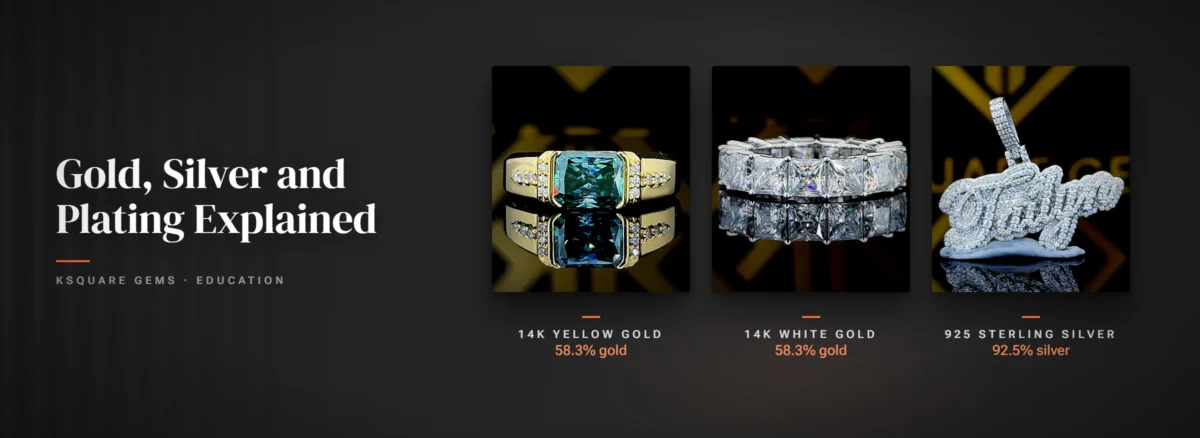
- Solid 14K gold is 58.3% pure gold (often stamped 585). It does not tarnish, it is hard enough for daily wear, and a plain band can usually be resized by a jeweler. Some of our rings are solid 14K yellow or white gold.
- Sterling silver is softer and tarnishes, so it suits rings worn now and then more than rings worn every day.
- Plated rings look like solid gold at first, but the plating on the palm side wears through faster than on any other kind of jewelry, because that surface touches everything you hold.
If you wear more than one metal, Mixing Metals explains how to make rings and a watch work together. Rings covered in stones all the way around, and many iced designs, are hard or impossible to resize, so get the size right the first time. See Gold, Silver and Plating Explained for more on what each metal is made of.
Looking after them
Rings take more abuse than any other jewelry. Every handshake, door handle and steering wheel touches them.
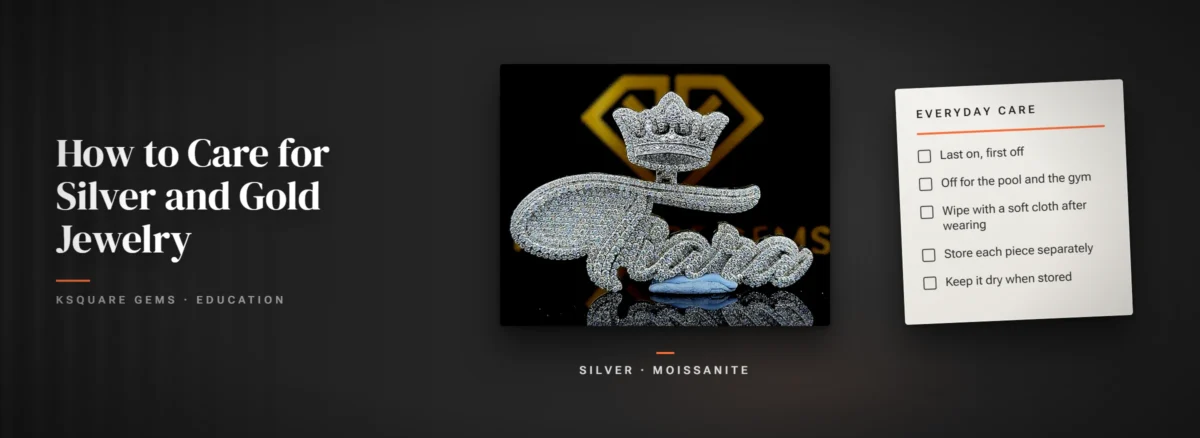
- Lotion, sanitizer and soap collect under iced tops and dull the stones. Clean them with warm water, a drop of mild dish soap and a soft toothbrush.
- Check stone settings every few months. A prong that has been knocked loose shows up as a stone that moves when you press it gently.
- Store rings apart from each other. Moissanite will scratch gold and silver.
Settings and how they hold stones are covered in Stone Settings Explained, and day-to-day care in How to Care for Silver and Gold Jewelry.
Frequently Asked Questions
Any finger works. The middle finger suits large statement rings, the pinky and index suit signets, and the left ring finger usually signals marriage in the US.
About 5 to 8 mm is the classic range. Under 5 mm reads slim and 8 mm or more reads bold. Wider bands often need half a size up.
No. The thumb and middle finger are usually the largest, and dominant-hand fingers are often about half a size bigger. Measure the exact finger you plan to wear the ring on.
Often not, especially rings set with stones all the way around. Plain solid gold bands can usually be resized by a jeweler, so check your size carefully before ordering an iced design.
Worldwide Delivery
Enjoy complimentary overnight shipping with fast delivery, ensuring convenience and prompt luxury service.
14 Days Returns
Experience peace of mind with our satisfaction guarantee, ensuring premium quality and unmatched customer service.
Lifetime Warranty
Shop with confidence, backed by verified trust ratings, secure transactions, and exceptional quality assurance every time.
24/7 Customer Support
We're here for you anytime, anywhere. Our dedicated customer support team is ready to assist you around the clock.