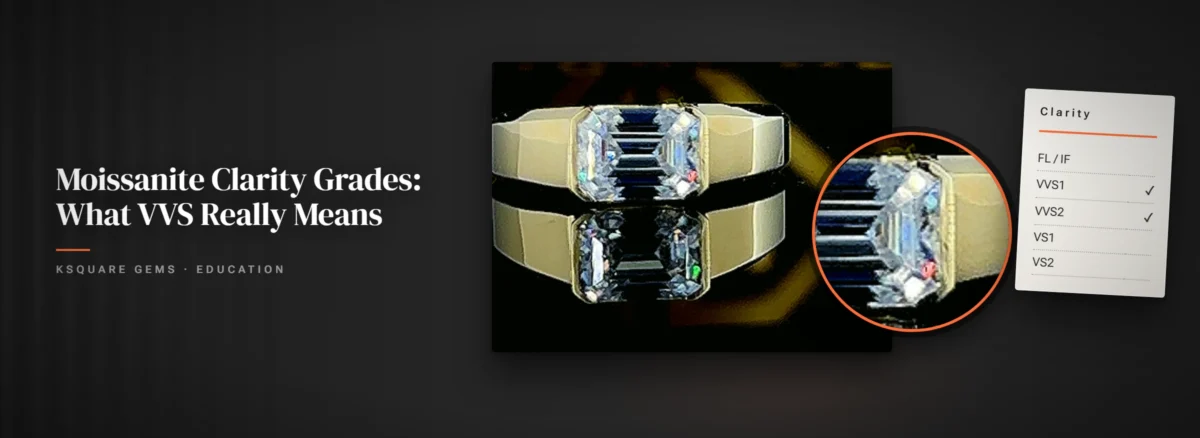
Moissanite Clarity Grades: What VVS Really Means
FL, VVS1, VS2, SI: what each clarity grade means under a 10x loupe, and how much it matters in a piece set with many small stones.
Quick Facts
“VVS” has become shorthand in hip-hop for clean, bright stones, and you will see it on listings everywhere. It is a real grading term with a precise meaning, borrowed from the diamond trade. Here is what the letters describe, what they leave out, and how to check a stone yourself with a loupe.
What an inclusion is
Almost every gemstone, natural or lab-grown, contains tiny features that formed while the crystal grew. Inside the stone they are called inclusions. On the surface, they are called blemishes. In moissanite the usual ones are:
- Needles: fine, straight growth lines, often running parallel to each other. They are typical of moissanite.
- Pinpoints: specks so small they look like dots of light or dark at 10x.
- Clouds: clusters of pinpoints that can give a hazy patch.
- Surface marks: polish lines, small nicks on a facet edge, or abrasion from wear.
Clarity grading ranks a stone by how many of these there are, how big they are, where they sit and how easy they are to find at 10x magnification. A small pinpoint near the edge, hidden under a prong, counts for less than the same speck in the middle of the table.
The clarity scale, grade by grade
Moissanite sellers and labs use the same letters as diamond grading. The scale runs from flawless down to included:

| Grade | Name | What a trained grader sees at 10x |
|---|---|---|
| FL | Flawless | No inclusions and no blemishes. |
| IF | Internally flawless | No inclusions, only minor surface blemishes. |
| VVS1 | Very, very slightly included 1 | Minute inclusions, extremely difficult to find. Often visible only from the underside. |
| VVS2 | Very, very slightly included 2 | Minute inclusions, very difficult to find. |
| VS1 | Very slightly included 1 | Minor inclusions, difficult to find. |
| VS2 | Very slightly included 2 | Minor inclusions, somewhat easy to find. |
| SI1 / SI2 | Slightly included | Noticeable inclusions. In larger stones SI2 may be visible without a loupe. |
Two things are worth keeping in mind. First, every grade is defined at 10x, the standard jeweler’s loupe. A VVS stone is clean under magnification, a far stricter test than looking clean to the eye. Second, the grades are judgments made by a person or a lab, and moissanite has no single grading authority the way diamond does. Moissanite Certificates explains what a lab report does and does not promise. A VVS1 from one source and a VVS1 from another should both be very clean, but they were not necessarily graded against the same reference stones.
Why lab-grown moissanite is mostly VVS
Natural moissanite is so rare that almost none of it is big enough to cut. Every moissanite you can buy as jewelry is silicon carbide grown in a lab at very high temperature. Controlled growth produces much cleaner crystal than nature usually manages, and most stones sold for jewelry grade VVS. Lower grades exist and sell for less, but you will rarely see SI moissanite on a jewelry listing.
This is a real difference from diamond shopping. With diamond, moving from VS2 to VVS1 can change the price a great deal. With moissanite, VVS is close to the normal standard, so it is a baseline to expect rather than a premium to hunt for.
“Eye clean” and what you actually see
A stone is eye clean when you cannot see any inclusion with the naked eye from a normal viewing distance, about 25 to 30 cm (10 to 12 inches). Most VS stones are eye clean. VVS stones are eye clean with a large margin to spare: you need a loupe, good light and some patience to find anything at all.
So the step from VVS1 to VS2 is invisible on the wrist or the chain. What you do notice is cut, color and how clean the stone is on the outside. Fire and Brilliance explains how cut and cleanliness change what you see. A VVS1 coated in lotion looks worse than a VS2 that was rinsed this morning.
Clarity in a piece with hundreds of stones
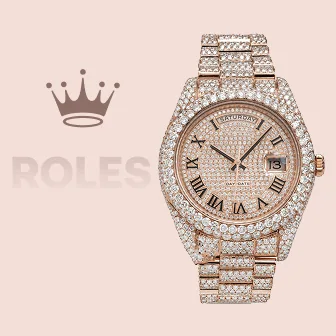
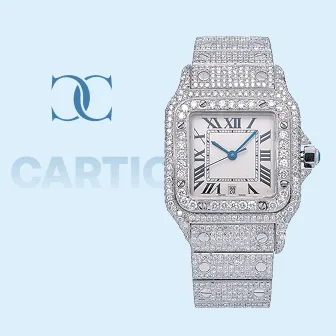
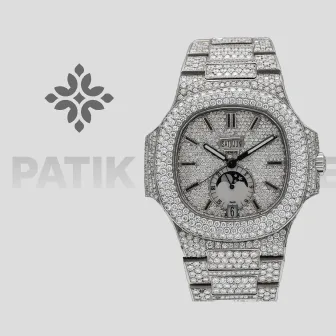
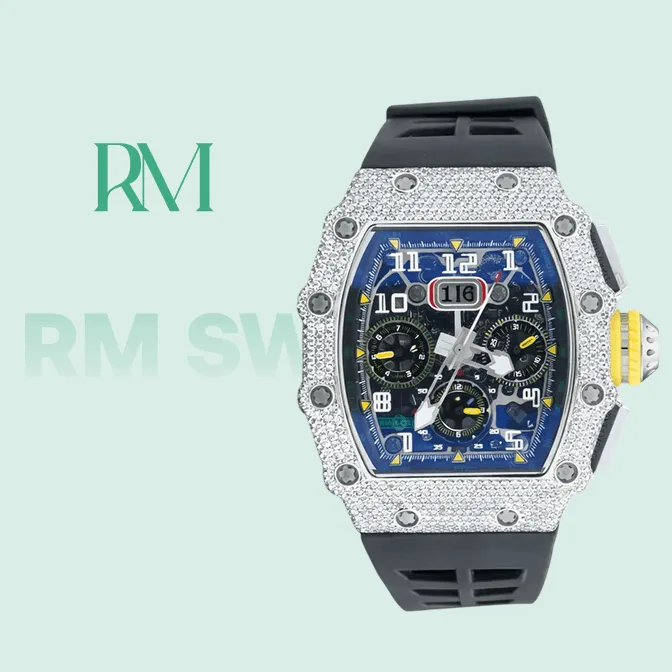
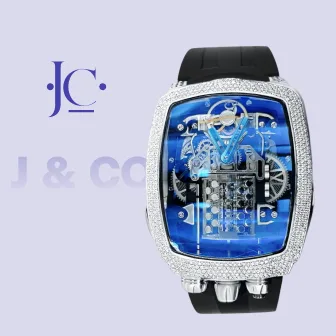
Iced pendants, grillz and watch bezels are covered in small stones, often 1 to 2 mm across. At that size clarity barely registers. A pinpoint inside a 1.3 mm stone is far smaller than anything you could pick out on a pendant moving on your chest. Small stones are also graded as a batch, not one by one, so “VVS” on a pavé piece describes the material used rather than a report for each stone.
In a busy piece, these matter far more than the clarity letters:
- Matching color: one slightly warmer stone stands out in a field of white ones.
- Even setting: stones sitting level, at the same height, all facing up.
- No dead spots: no gaps, missing stones or stones set crooked that go dark when you tilt the piece.
- Secure prongs: small beads or claws that hold each stone without snagging clothes.
Stone Settings Explained covers how pavé and prong settings hold small stones, and what good work looks like.
How to use a loupe
A 10x triplet loupe is cheap and is the same tool graders use. It takes a few minutes to get comfortable with:
- Clean the piece and dry it with a lint-free cloth.
- Hold the loupe close to your eye, about an inch away, not out at arm’s length.
- Bring the jewelry toward the loupe until the stone comes into focus, roughly 2.5 cm (1 inch) from the lens.
- Rest your hands together or brace your elbows on a table. At 10x the slightest shake throws the stone out of focus.
- Light from the side with a desk lamp or a window, not from behind you.
- Look through the table first, then tilt slowly so you see the stone from several angles. Shift focus slightly up and down to look through the full depth.

Two things often confuse first-time loupe users with moissanite. Facet edges that look doubled are caused by moissanite’s double refraction, which is normal and not a flaw. And the reflection of a prong or a neighboring stone inside a facet can look like an inclusion. Tilt the piece: reflections move and change, inclusions stay put.
What to take from the grade
Treat VVS as a sign of clean material and move on to the questions that change how the piece looks every day: cut quality, color, how well the stones are set and how often you clean it. For the basics on the stone, read What Is Moissanite?, and to see how stone shape affects what a loupe shows, read Moissanite Cuts and Shapes.
Frequently Asked Questions
Both have minute inclusions that are very hard to find at 10x. In VVS1 they are extremely difficult to find and often visible only from the underside; in VVS2 they are a little easier for a trained grader to spot. Without a loupe the two look identical.
Not with the naked eye at normal distance. Both are usually eye clean. The difference only shows under magnification, so cut, color and cleanliness have a far bigger effect on how the stone looks.
No. Small pavé stones are graded and sorted as a batch. When a pavé piece is described as VVS, it describes the grade of material used, not a separate report for each stone.
Moissanite is doubly refractive, so light splits into two rays inside it and facet edges can appear doubled, mostly in larger stones viewed at an angle. It is a property of the material, not an inclusion or a defect.
Worldwide Delivery
Enjoy complimentary overnight shipping with fast delivery, ensuring convenience and prompt luxury service.
14 Days Returns
Experience peace of mind with our satisfaction guarantee, ensuring premium quality and unmatched customer service.
Lifetime Warranty
Shop with confidence, backed by verified trust ratings, secure transactions, and exceptional quality assurance every time.
24/7 Customer Support
We're here for you anytime, anywhere. Our dedicated customer support team is ready to assist you around the clock.