
Moissanite Cuts and Shapes
Round, emerald, Portuguese, crushed ice: how the cut changes the sparkle, the size and the setting.
Quick Facts
Shape and cut are not the same thing
Shape is the outline of a stone seen from above: round, oval, pear, emerald. Cut describes how its facets are arranged and finished. Two stones can share a shape and look completely different because of the way they were cut. Because moissanite is grown in a laboratory and cut to order, almost every shape is available, so it is worth knowing what each one actually does on the hand or the chain.

Brilliant cuts: built for sparkle
Brilliant cuts use triangular and kite-shaped facets that radiate out from the center. They break light into lots of small, bright flashes. The round brilliant, with 57 or 58 facets, is the most efficient shape of all at sending light back to your eye, and it is the stone at the heart of most of our pendants and rings.
Moissanite takes this further than diamond. Its refractive index is higher, around 2.65 against diamond’s 2.42, and its dispersion, the splitting of white light into colors, is more than twice diamond’s. In practice a well-cut round moissanite throws visibly more rainbow “fire”, especially under spotlights or in direct sun. Plenty of people buy moissanite for exactly that. If you prefer a calmer, whiter look, a step cut tones it down.
The other brilliant shapes you will see:
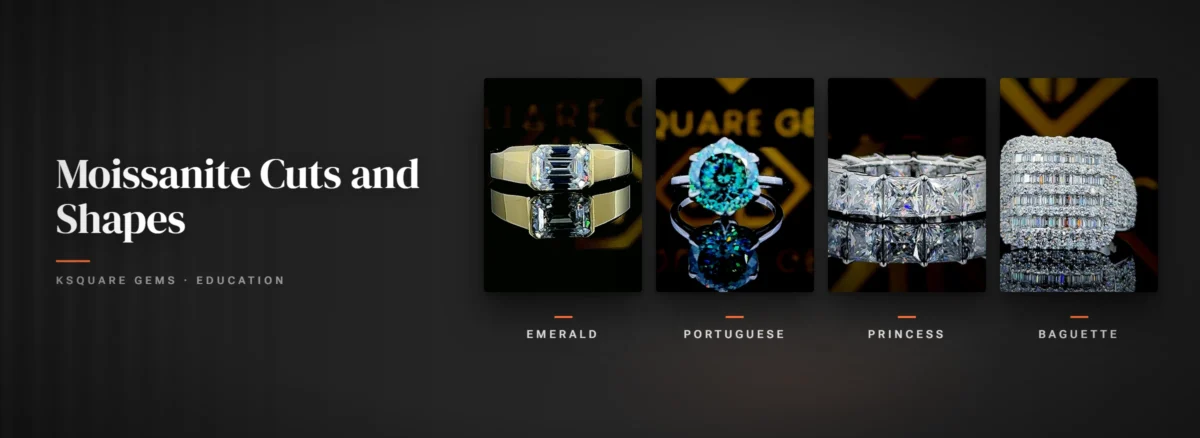
- Princess: square with sharp corners. Crisp and modern, and easy to line up edge to edge, which is why it turns up in eternity bands and on some grillz. Those pointed corners need prongs to protect them.
- Cushion: a square or rectangle with softly rounded corners, a little vintage in feel.
- Oval and pear: elongated shapes that look larger than a round of the same weight and make the finger look longer.
- Radiant: the trimmed-corner outline of an emerald cut with brilliant faceting inside, so you get the rectangular shape with a lot more sparkle.
Step cuts: the emerald and the baguette
Step cuts have long, flat facets running parallel to the edges, like a staircase. Instead of scattered sparkle they give broad flashes of light and dark, often called the hall-of-mirrors effect. The emerald cut is the classic: a rectangle with clipped corners that looks clean and architectural. The baguette is a small, narrow step cut that works in rows, around a watch bezel or either side of a center stone.
The large open table of a step cut lets you see right into the stone, so clarity and color matter more here, and moissanite’s high clarity suits these cuts well. One thing worth knowing: moissanite is doubly refractive. In larger stones you may notice a slight doubling of the facet edges when you look through the top at an angle. Good cutters orient the crystal to keep it to a minimum and in most pieces you will not see it without a loupe, but it shows most readily in big emerald cuts.
Crushed ice or brilliant?
Some of our ring listings offer a choice of “brilliant or crushed ice”. Crushed ice is a faceting style, usually on elongated outlines such as radiant, cushion or emerald, with many small facets that break the light up into a glittering texture, a bit like shaved ice. A standard brilliant pattern gives larger, crisper flashes. Neither is better. Crushed ice reads as busier and more sparkly from across a room; a brilliant looks more defined up close.
The Portuguese cut
The Portuguese cut is an antique-inspired round with far more facets than a standard brilliant, often a hundred or more, arranged in several tiers on both the top and the underside. The result is a dense, kaleidoscope-like sparkle. It needs a fair size to show off all those facets, which is why you usually meet it as the center of a statement ring.
Size: think in millimeters
Carat is a measure of weight, not size. Moissanite is roughly 9% lighter than diamond, so a moissanite of a given size weighs a little less than a diamond of the same size. That is why many sellers quote “diamond equivalent weight” (DEW): what the stone would weigh if it were a diamond. It makes comparison easier, but it is also why two listings of “1 carat” moissanite can describe slightly different stones.
The reliable way to compare is millimeters. Our ring listings give the stone’s measurements, and those numbers tell you exactly how big it will look.

Shape changes apparent size as well. Oval, pear, marquise and emerald outlines spread their weight over a larger face than a round does, so they look bigger for the same carat weight. A stone cut very deep hides weight below the setting, where nobody sees it.
Matching the shape to the piece
| Piece | Shapes that work best | Why |
|---|---|---|
| Solitaire ring | Round, oval, emerald, Portuguese | One stone carries the design, so the cut is on show. |
| Eternity band | Princess, round, emerald | Shapes that sit edge to edge without gaps. |
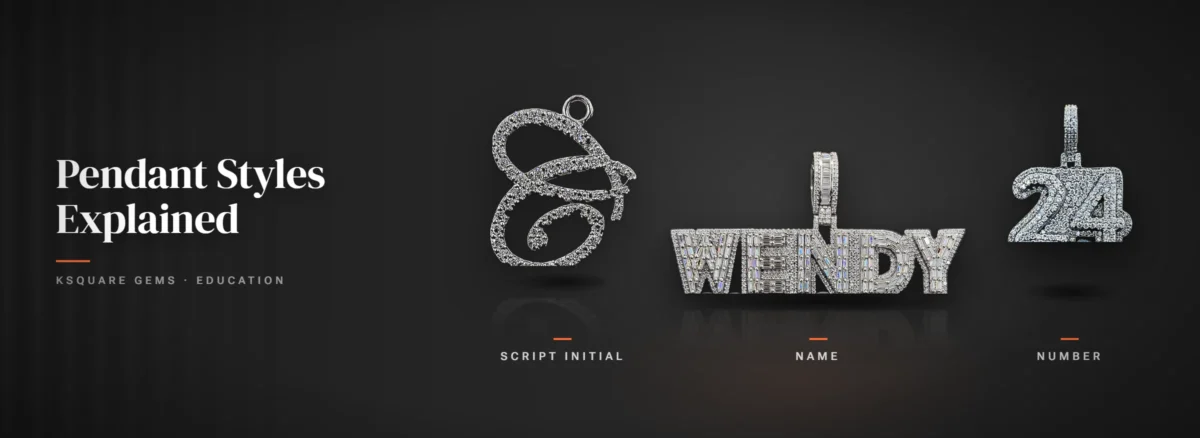
| Iced-out pendant | Small rounds, baguette accents | Small rounds follow curves; baguettes add clean straight lines. |
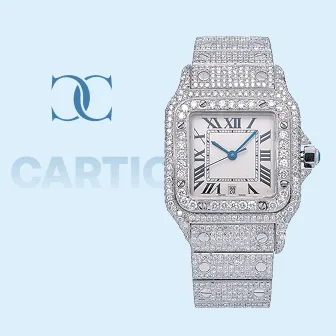
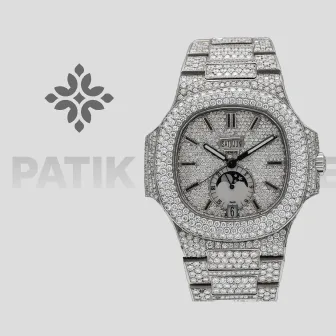
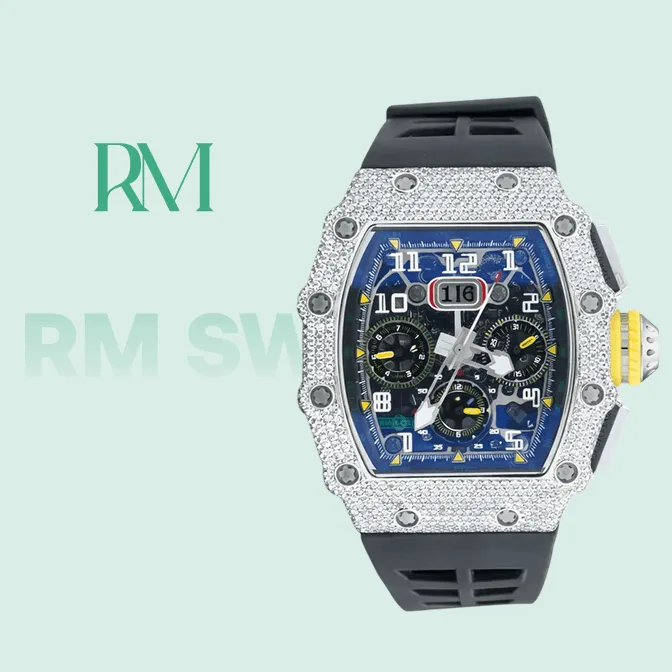
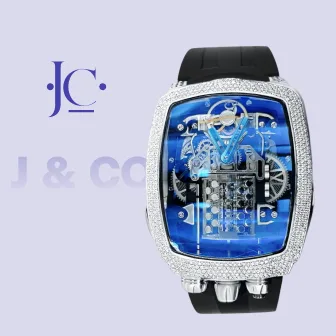
| Watch bezel | Round or baguette | Rounds for maximum sparkle, baguettes for a sleeker look. |
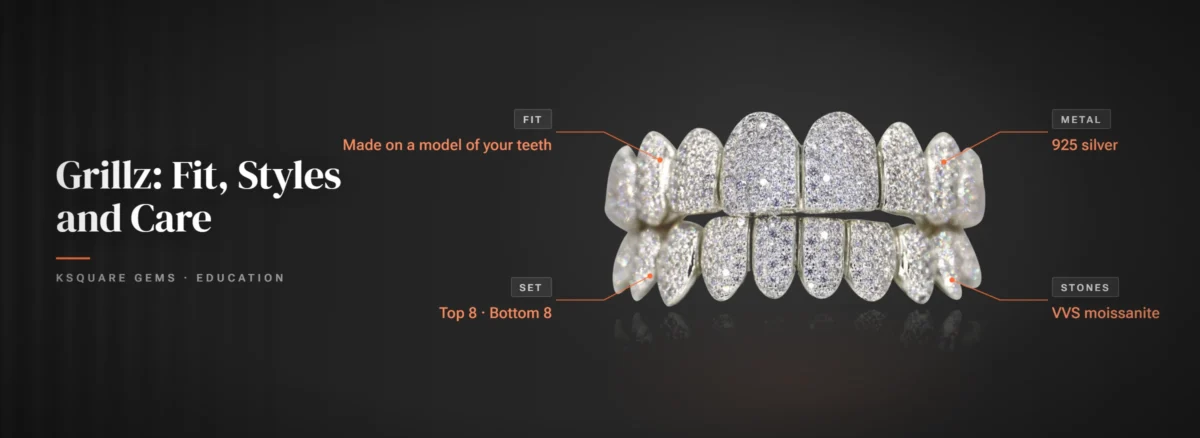
| Grillz | Round, princess | Small stones follow the contours of each tooth. |
New to moissanite? Start with What Is Moissanite?, and see how the stones are held in place in Stone Settings Explained.
Frequently Asked Questions
The round brilliant returns the most light and shows the most fire. Radiant and crushed-ice cuts come close.
That is dispersion, often called fire. Moissanite splits white light into spectral colors more strongly than diamond, and it shows most in direct sunlight and under spotlights.
Diamond equivalent weight: what the stone would weigh if it were a diamond of the same size. Moissanite is lighter, so its actual weight is a little lower. Comparing millimeter sizes avoids any confusion.
Yes. Moissanite's clarity suits step cuts. In larger stones, look at it from a few angles, as step cuts show the slight facet doubling of moissanite more readily than brilliant cuts.
Worldwide Delivery
Enjoy complimentary overnight shipping with fast delivery, ensuring convenience and prompt luxury service.
14 Days Returns
Experience peace of mind with our satisfaction guarantee, ensuring premium quality and unmatched customer service.
Lifetime Warranty
Shop with confidence, backed by verified trust ratings, secure transactions, and exceptional quality assurance every time.
24/7 Customer Support
We're here for you anytime, anywhere. Our dedicated customer support team is ready to assist you around the clock.